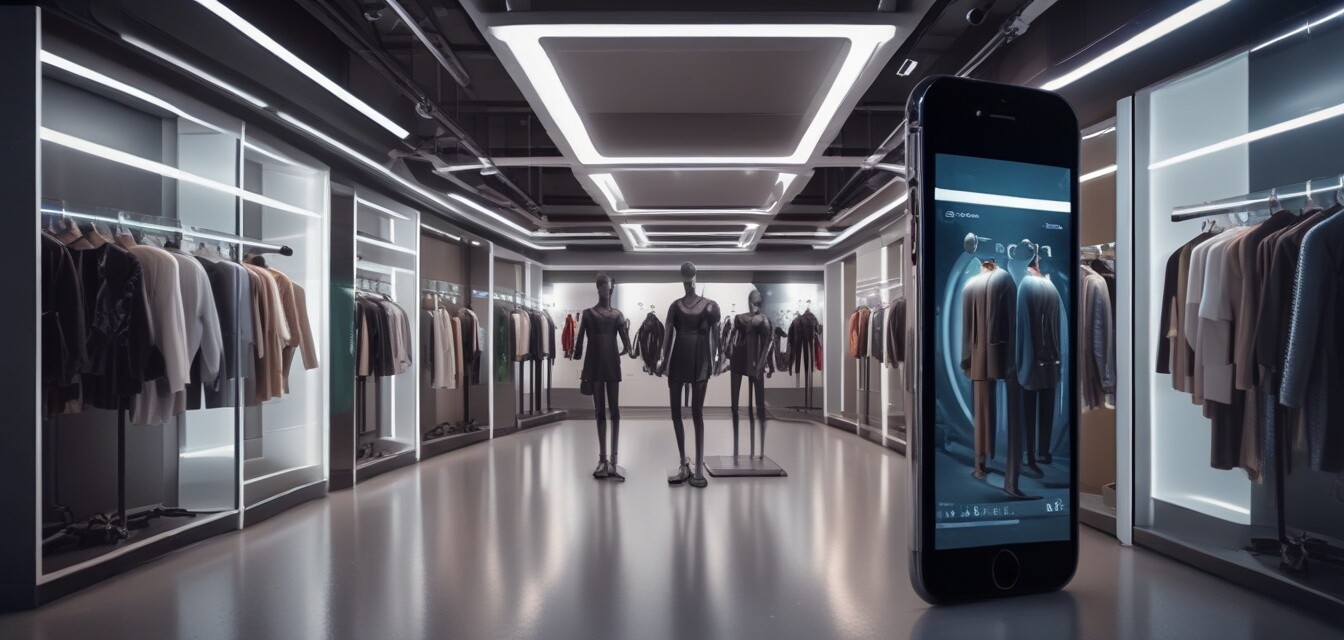
The Role of Augmented Reality in Fashion Shopping
- Augmented reality (AR) is revolutionizing men's fashion shopping.
- AR enhances customer experience through virtual try-ons and personalized options.
- Retailers are integrating AR technology to bridge the gap between online and in-store shopping.
- Emerging trends show an increasing demand for tech-integrated apparel.
- Future developments in AR promise even more innovative shopping experiences.
The fashion industry is witnessing a transformative shift as technology becomes a cornerstone of the shopping experience. Augmented reality (AR) is at the forefront of this evolution, changing how men shop for clothing. By providing virtual try-ons and personalized fitting experiences, AR enhances customer satisfaction and builds a deeper connection between consumers and retailers. Dive deeper with us into the fascinating realm of AR in fashion shopping.
What is augmented reality in fashion?
Augmented reality merges the physical and digital worlds, offering users an interactive experience through digital overlays in real-time. In fashion, this means customers can virtually try on clothing and accessories before making a purchase. This technology reduces the guesswork associated with buying clothes online, leading to more informed purchasing decisions.
How augmented reality enhances the shopping experience
- Virtual Try-Ons: Customers can visualize clothing on themselves, eliminating uncertainty.
- Personalized Recommendations: AR can suggest outfits based on customer preferences and past purchases.
- Interactive Shopping: Customers can engage with products in a fun and innovative way.
- Saves Time: Shoppers can quickly find suitable items without physically trying them on.
Benefits of augmented reality in men's shopping
| Benefit | Description |
|---|---|
| Increased Engagement | AR offers a unique way for customers to interact with products, making shopping more enjoyable. |
| Reduced Return Rates | By allowing virtual try-ons, AR helps customers choose better-fitting items, decreasing returns. |
| Enhanced Brand Loyalty | Interactive experiences keep customers returning for more innovative features and experiences. |
| Competitive Advantage | Retailers using AR stand out from the competition by offering cutting-edge technology. |
Trends in augmented reality fashion shopping
The trend toward incorporating AR in the fashion industry is on the rise. Here's how:
- Integration of AR in mobile apps for seamless shopping experiences.
- Collaboration between fashion brands and tech companies to enhance AR applications.
- Growth of social media platforms using AR for virtual try-ons.
- Development of smart mirrors in stores that utilize AR for a futuristic shopping experience.
The future of augmented reality in fashion
As AR technology evolves, new applications are emerging, promising an even more immersive shopping experience. From advanced fitting technologies to AI-powered recommendations, the future of AR in fashion is bright. Retailers are investing heavily in this technology, anticipating a future where shopping becomes an interactive experience unlike any other.
Key players in augmented reality fashion
Several companies are leading the way in implementing AR within the fashion sector:
| Company | AR Feature | Notes |
|---|---|---|
| Brand A | Virtual Fitting Rooms | Offers immersive 3D fitting room experience. |
| Brand B | Social Media Integration | Allows users to share their looks with friends. |
| Brand C | Smart Mirrors | Integrates AR with in-store shopping for personal styling. |
Conclusion
Augmented reality is undoubtedly changing the landscape of men's fashion shopping. By improving the customer experience through virtual try-ons and personalized interactions, AR not only keeps customers engaged but also drives sales for retailers. As we look to the future, the synergy between fashion and technology will continue to innovate how we approach shopping, making it an exciting time for consumers and businesses alike.
Tips for integrating AR in shopping
- Consider user-friendly applications for brands and consumers.
- Stay updated on the latest AR developments to stay competitive.
- Incorporate feedback from customers to improve the AR shopping experience.
- Use AR alongside traditional marketing strategies for best results.
Pros
- Enhanced shopping experience through interactivity.
- Reduces uncertainty in clothing fit and style.
- Drives customer engagement and loyalty.
Cons
- High implementation costs for retailers.
- Requires technology infrastructure and support.
- Potential technical issues for users.